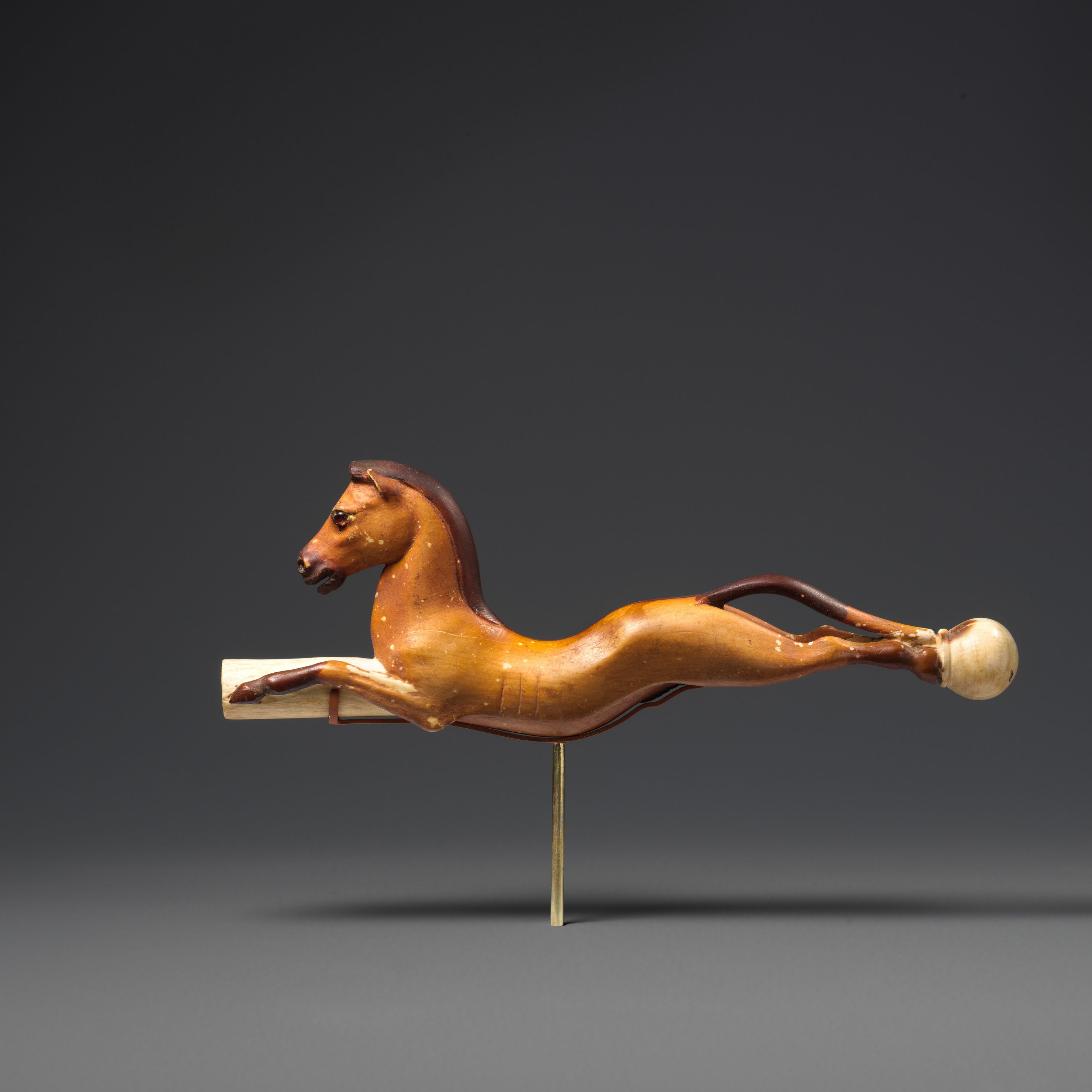
Whip Handle in the Shape of a Horse
View on Met Museum →Description
Overview Whip Handle in the Shape of a Horse New Kingdom ca. 1390–1352 B.C. On view at The Met Fifth Avenue in Gallery 119 The horse was a relative latecomer to Egypt. It was introduced in the Second Intermediate period during the Hyksos domination of northern Egypt (ca. 1667–1570 B.C.E.), when new elements of warfare, notably the horse and chariot, were brought from the Near East. During the New Kingdom, this animal became a familiar sight, and there were many depictions of horses in art, particularly during the Amarna period.
This small ivory handle of a light whip or fly whisk is carved in the form of a prancing or running horse stained reddish brown with a black mane. The eyes, one of which has fallen out, were inlaid with garnet. The lively carving of this piece, especially the gracefully arched back, typifies the ability of Egyptian artists to evoke the essential qualities of animals. It also exemplifies the fine quality attained in the decorative arts during the reign of Amenhotep III. View more