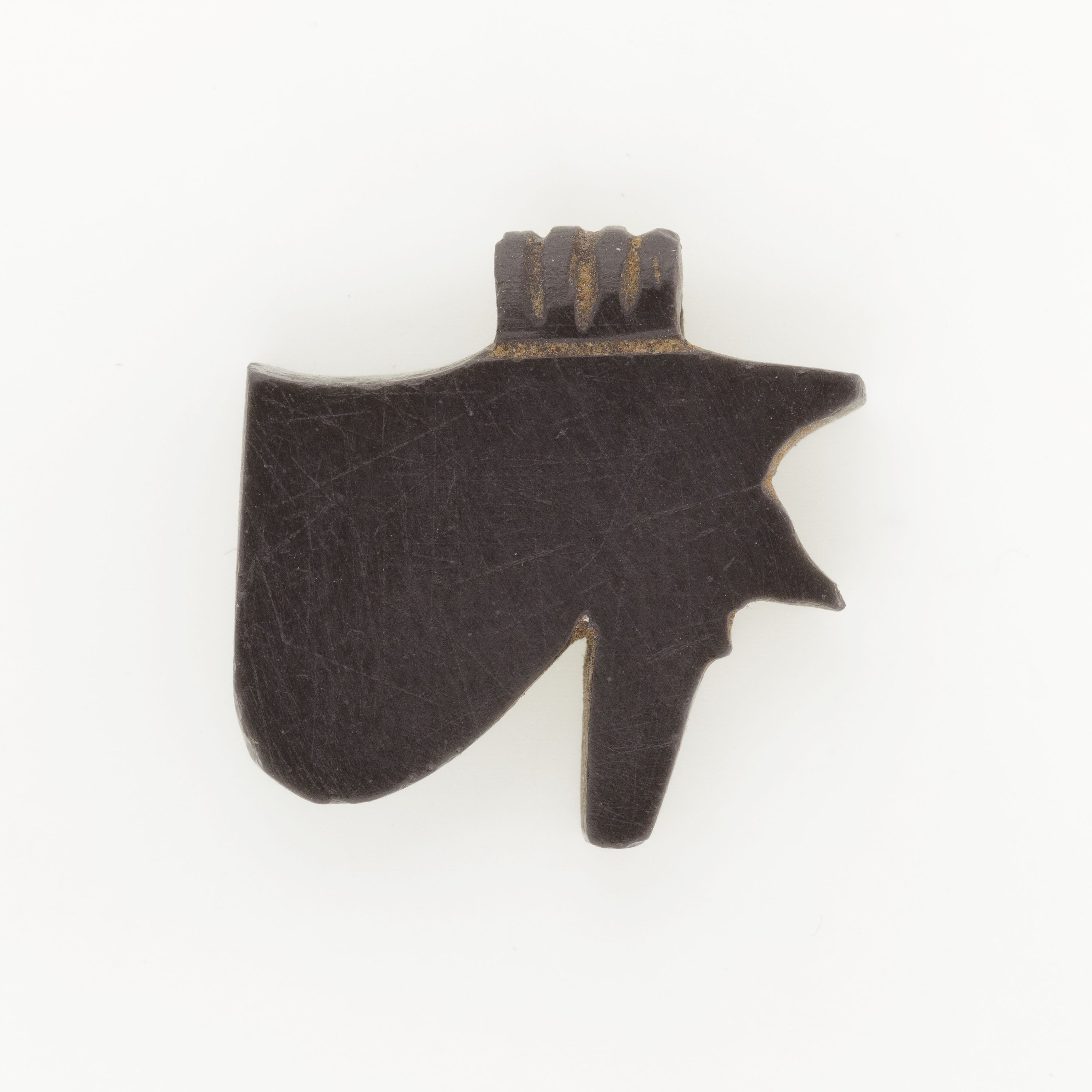
Wedjat eye amulet
View on Met Museum →Description
Overview Wedjat eye amulet Late Period–Ptolemaic Period 664–30 B.C. On view at The Met Fifth Avenue in Gallery 127 One of the most popular amulets in ancient Egypt, the wedjat eye represents the healed eye of the god Horus. It depicts a combination of a human and a falcon eye, since Horus was often associated with a falcon. Its ancient Egyptian name, wedjat, means "the one that is sound (again)." In Egyptian mythology Horus’ eye was injured or stolen by the god Seth and then restored by Thoth. The wedjat eye embodies healing power and symbolizes rebirth. An amulet in this shape was thought to protect its wearer and to transfer the power of regeneration onto him or her. It was used by the living as well as for the dead. View more