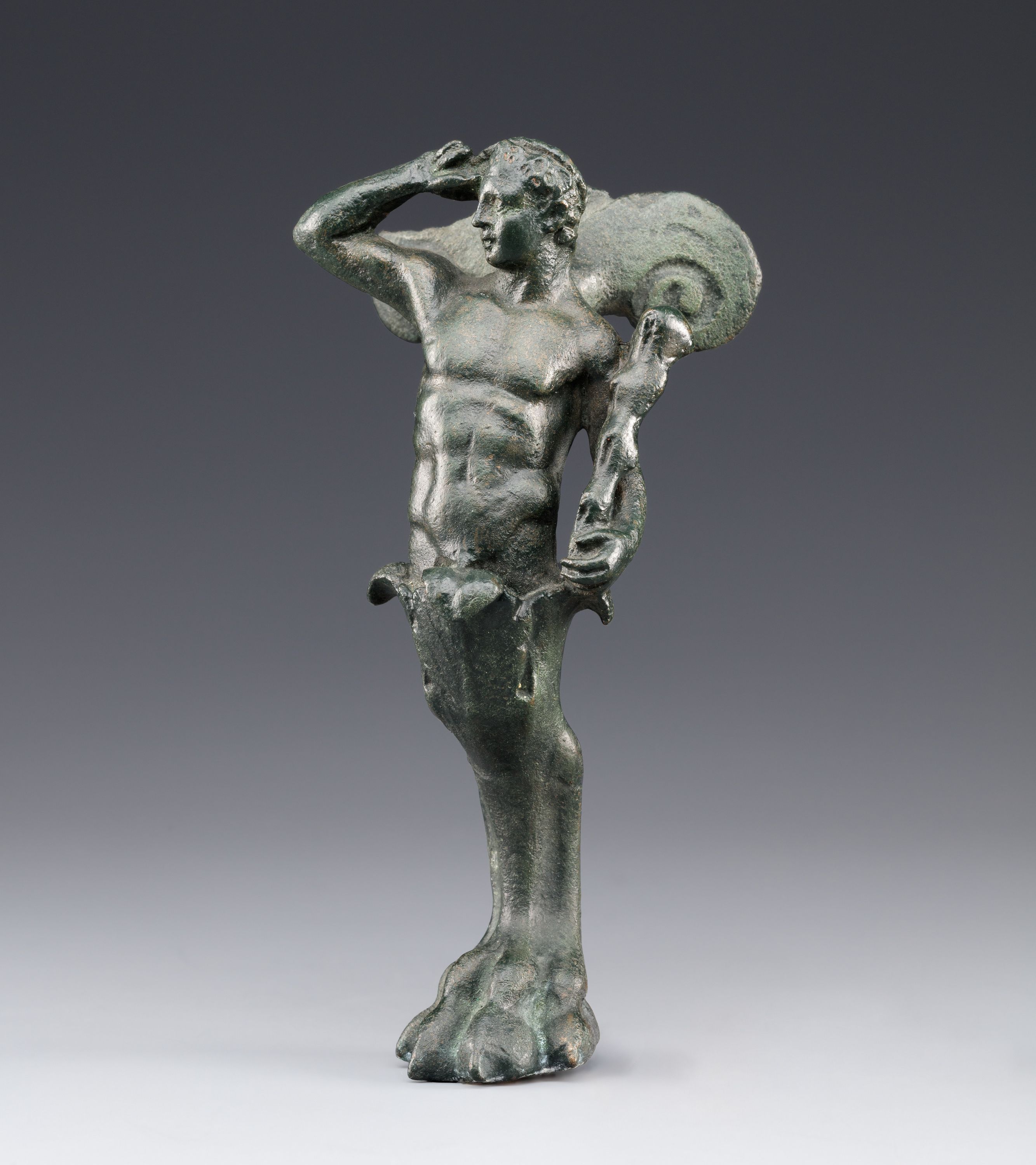
Vessel support combining the upper body of Herakles and a lion's foot
View on Met Museum →Description
Overview Vessel support combining the upper body of Herakles and a lion's foot Ptolemaic or Roman Period 200 B.C.–A.D. 50 Not on view Many artworks of the Roman Period in Egypt represent the taste of wealthy urban merchant and rich farming classes of Roman Egypt. Wide trade of luxury works is evident, and Greco-Roman style dominates.
Since Egyptian pharaohs had first authorized Greek trading colonies and employed Greek mercenaries in the seventh century BC., there was a considerable Greek presence in Egypt. With Alexander's conquest, Macedonian Greek Ptolemies ruled as successors to the pharaohs, and Ptolemaic Greek and eastern Mediterranean soldiery was heavily settled in parts of Egypt. Although the Ptolemaic kings maintained traditional Egyptian religious and political forms, elite society, of mixed Greek and Egyptian descent, aspired to Greek culture in many respects. With the replacement of a Ptolemaic pharaoh in Memphis and Alexandria by a Roman emperor in Rome, the status of Greek culture and art, if anything, increased. However, multiple cultural influences were t play, and their reconciliation differed, depending on the identity of the patron and on whether personal, public, religious, or funerary purposes were in question.
On this finial for a vessel or furniture support, Herakles, identifiable by his short curly hair and club, is depicted as an athlete, gesturing toward the victor's wreath on his head. View more