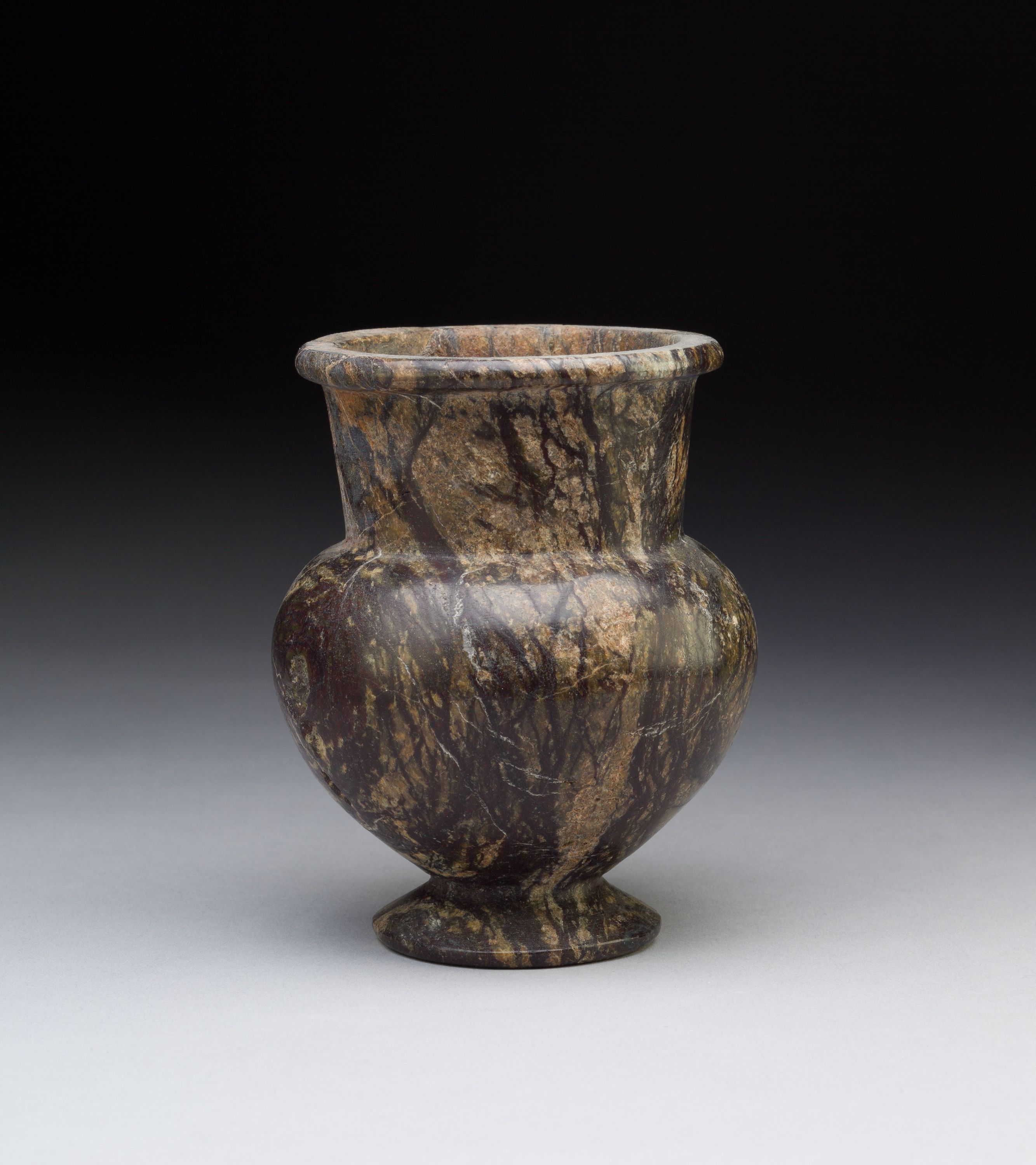
Unguent Jar from Neferkhawet's Tomb
View on Met Museum →Description
Overview Unguent Jar from Neferkhawet's Tomb New Kingdom ca. 1504–1447 B.C. On view at The Met Fifth Avenue in Gallery 116 Two cosmetic jars of dark stone were found inside the coffin of Amenemhat, a scribe who lived during the joint reign of Hatshepsut and Thutmose III. The jars were located near the right leg of the mummy next to a hes-vase made of faience. Both contained a brown resinous crust and appear to have been closed with a piece of linen cloth that was tied around the neck with linen cord that was secured with a mud seal.
Amenemhat was the son of a man named Neferkhawet, and his burial was found in the family tomb in Western Thebes. This tomb was excavated by the Museum's Egyptian Expedition in 1935 and, at the end of the excavation season, this jar came to New York and the other went to the Egyptian Museum in Cairo. View more