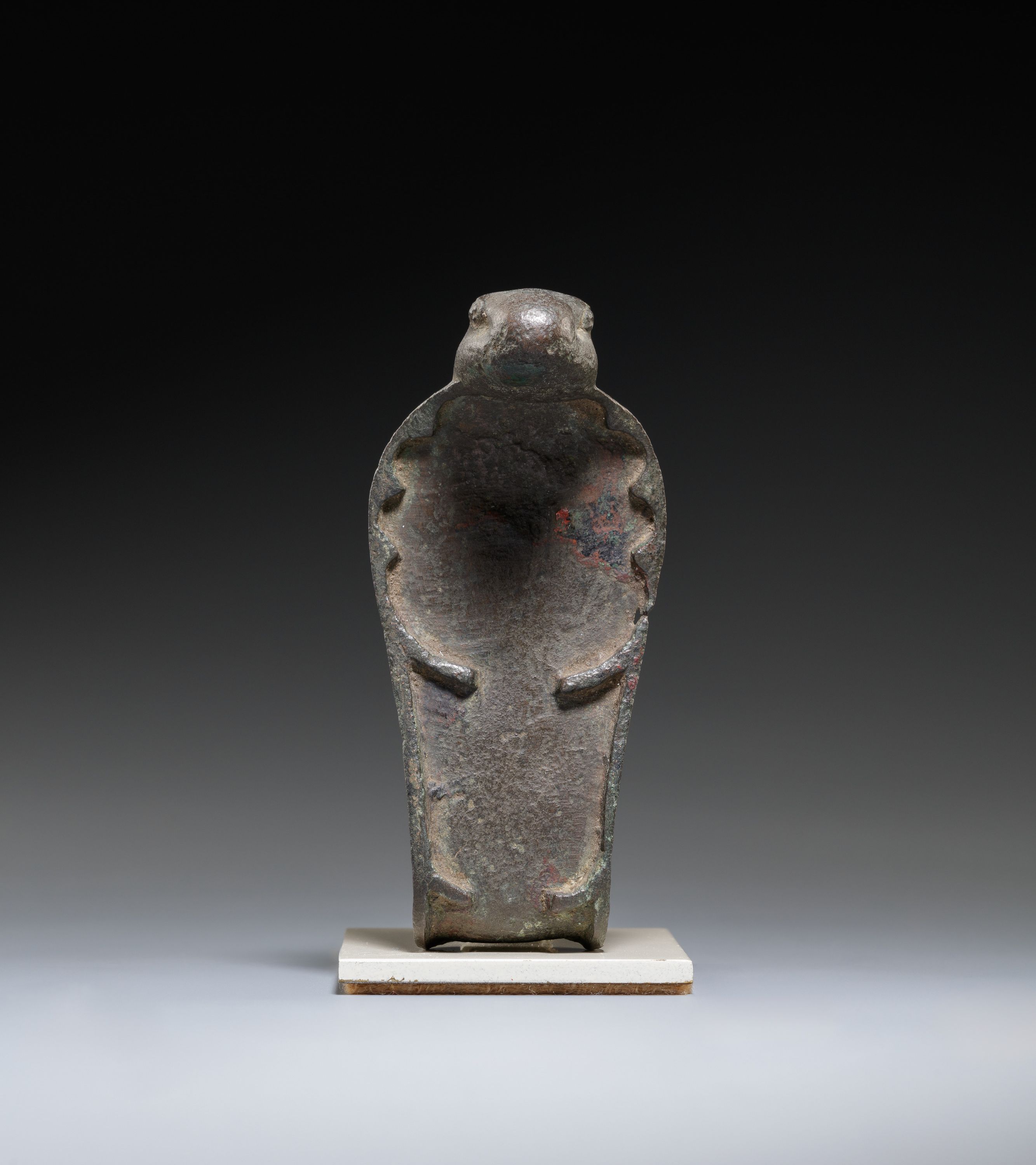
Uraeus decoration from shrine
View on Met Museum →Description
Overview Uraeus decoration from shrine New Kingdom–Late Period ca. 1550–332 B.C. On view at The Met Fifth Avenue in Gallery 130 The rearing cobra, its upper body raised and its hood inflated, was a symbol of protection in ancient Egypt. Known commonly by its Greek name, the uraeus (iaret in Egyptian) was seen as the embodiment of several goddesses, particularly Wadjet, the patron deity of Lower (northern) Egypt. Images show royal and divine headdresses adorned with uraei at the forehead, facing forward to spit fire and venom at the enemies of Egypt.
Friezes of rearing cobras are depicted along the tops of architectural features such as shrines, creating a protected space inside. This uraeus, which has a dowel hole underneath, was likely an element in one of these friezes. View more