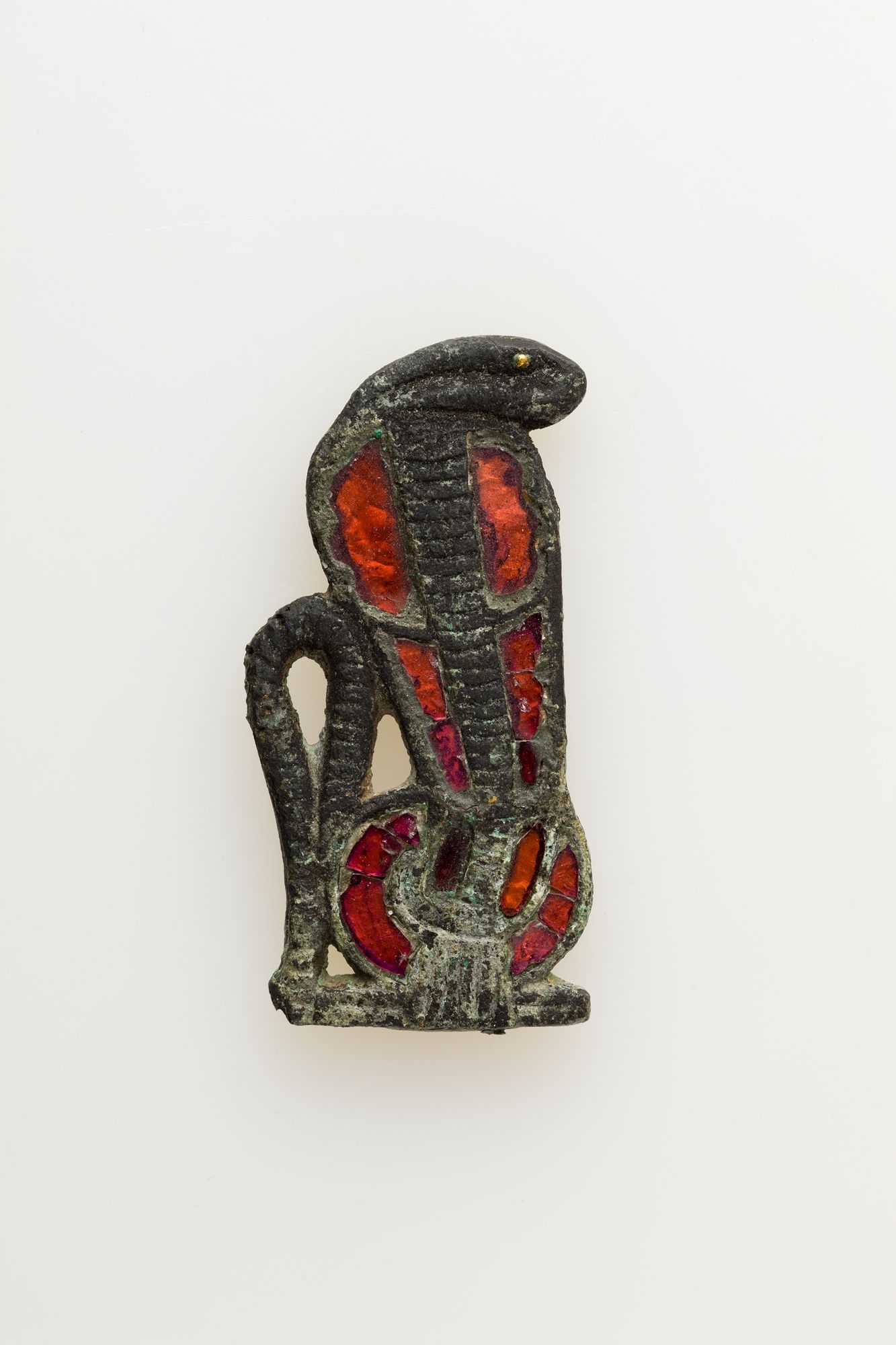
Uraeus for freize
View on Met Museum →Description
Overview Uraeus for freize Late Period–Ptolemaic Period 664–30 B.C. On view at The Met Fifth Avenue in Gallery 134 When a cobra is threatened, it raises its upper body and inflates its hood. In ancient Egypt the rearing cobra (also called an uraeus) was seen as protection and was also associated with a number of goddesses. Deities or royals often wear an uraeus on their foreheads as protection and to indicate their divine or royal status. A frieze of rearing cobras was often used as a protective and decorative element for furniture or architecture. The piece here and one like it (17.192.46) were possibly part of such a frieze.