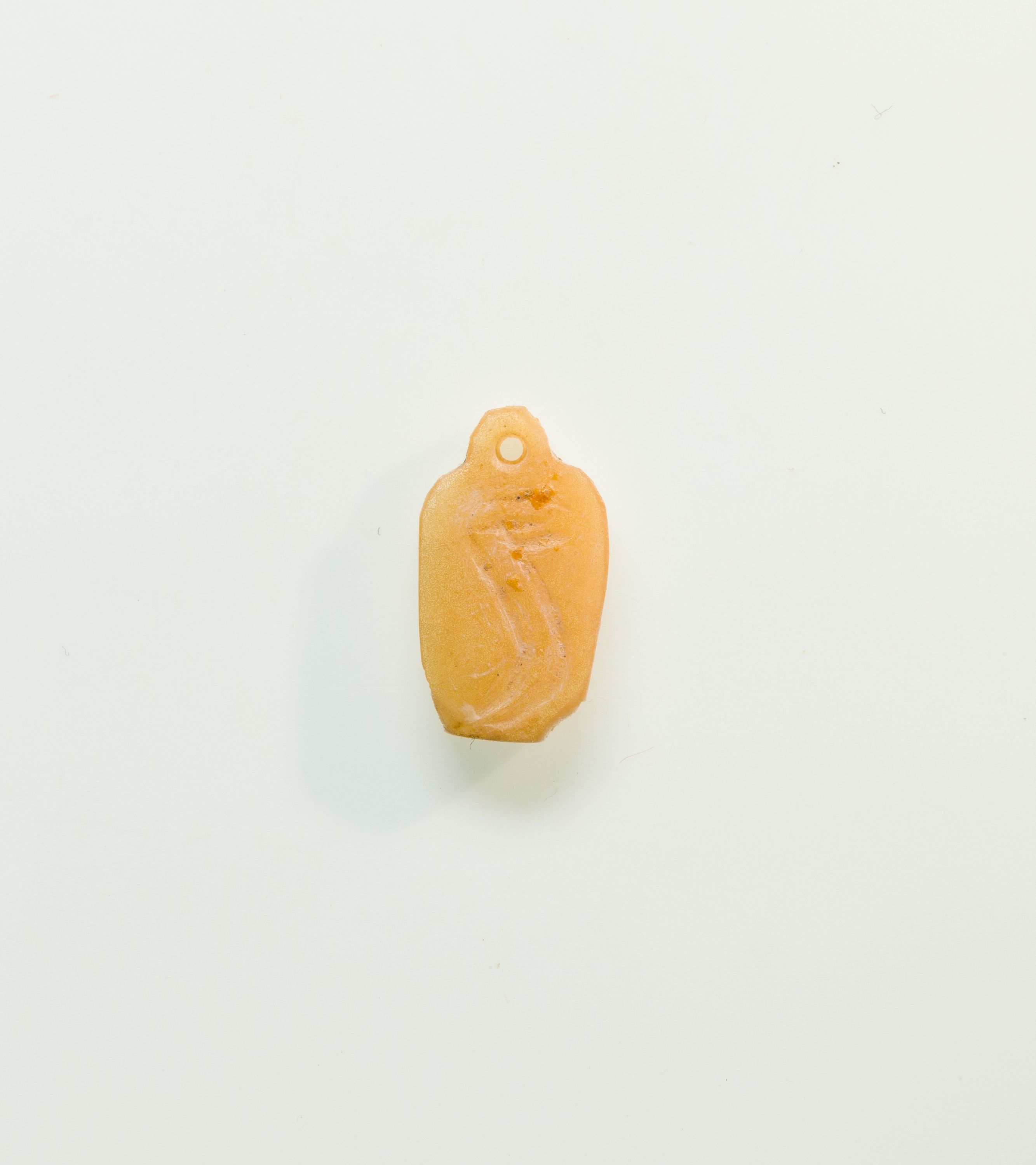
Uraeus plaque from a string of amulets
View on Met Museum →Description
Overview Uraeus plaque from a string of amulets Third Intermediate Period ca. 1070–945 B.C. On view at The Met Fifth Avenue in Gallery 126 Nine amulets of various materials were found threaded together in a tight group around the throat of the Lady Djedmutesankh; two of these, of green glass, disintegrated after they were discovered. This plaque is roughly incised with the figure of a rearing cobra, or uraeus, the totem of several important goddesses. One of the most dangerous snakes in Egypt, the cobra became a symbol of protection, thought to spit fire at enemies of the king. Djedmutesankh also had a gold amulet on her forehead (see 25.3.167).
For the amulet group, see 25.3.169-related. View more